
Yuncheng Kangdaer Steel Ball Co., Ltd. was established in 1998 and has a long history in Shandong Town. (Yuncheng Water Margin!)
Kangdaer Steel Ball Factory has introduced many advanced steel production and testing equipment, which has greatly improved production efficiency and product quality, providing more high-quality steel to new and old customers. The main specifications are 0.3mm-200.0mm, and the main models are stainless steel ball bearings, steel balls, chrome steel balls, drilled steel balls, electroplated balls, micro balls, and large balls.

Application areas:
It is commonly used in bicycles, bearings, motorcycles, automobiles, slide rails, ISBs, luggage, electronics industry, etc.
Function:
high speed
low price
High hardness, HRC: 60-66
Chemical and physical composition of Gcr15, AISI52100 chromium steel balls
| C | 0.95-1.10% |
| Si | 0.15-0.35% |
| Mn | Maximum 0.50% |
| P | Maximum 0.025% |
| S | Maximum 0.025% |
| Cr | 1.30-1.60% |
Photo shows

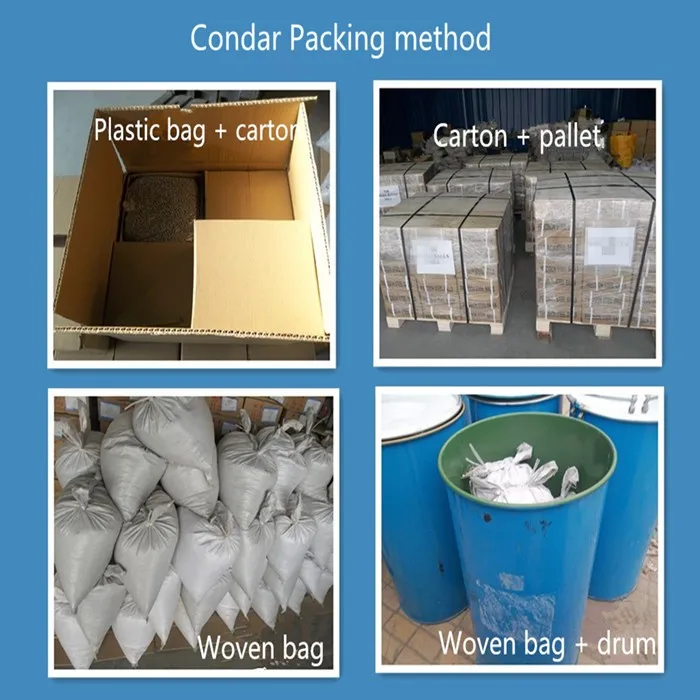
Packaging details: Carton packaging, woven bags, cartons + pallets, rollers, or packaging according to customer requirements.
Delivery details: 3-5 days after order, depending on order quantity.

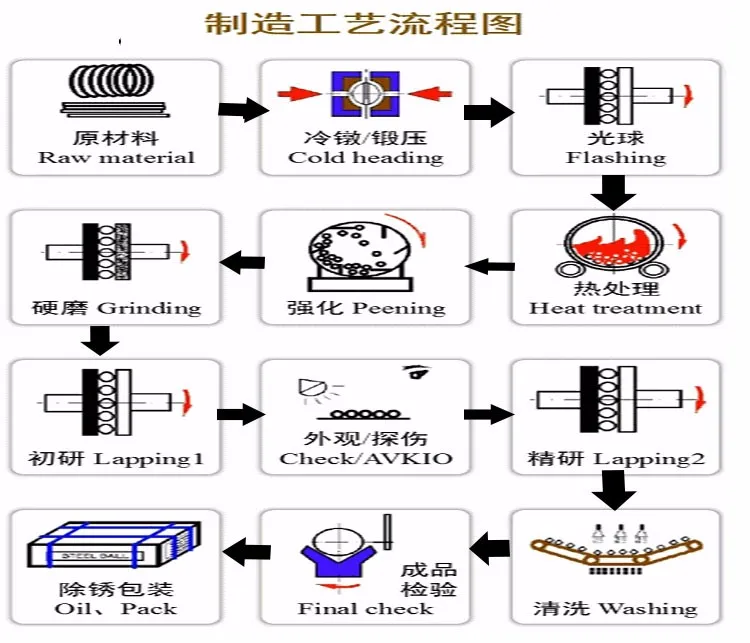
Production process
Steel ball testing
The hardness of steel balls is generally tested using a Rockwell hardness tester, and is usually expressed as HRC+ value.
1. The hardness of bearing steel balls is generally HRC60-66;
2. The hardness of stainless steel balls is generally around HRC26;
3. The hardness of carbon steel balls is generally HRC55-65;
4. The hardness of the soft carbon steel ball is approximately HRC30;
G5 and G10 high-precision steel balls are mainly used to measure ellipticity, that is, the spherical error of the ball, which is mainly detected by a roundness meter. Through its measurement, a computer can draw a very precise trajectory, thereby determining whether the ellipticity is correct.
The most important thing for steel balls is to measure the tolerance using a micrometer or a spiral micrometer. Large steel balls are measured using vernier calipers.


Seat tracks roll on individual chrome steel balls, and these are made for exactly that duty. Each one is a solid, separate ball rather than a caged unit, so a rail can be built or rebuilt with the count it needs. Rail builders, seat assembly plants and repair workshops use them both ways: on the line for new tracks, and at the bench when a worn rail is stripped, cleaned and refilled. It is simple, replaceable hardware for a part of the seat that moves every day.
| Property | Value |
|---|---|
| Material | Chrome steel (AISI 52100 / GCr15 / SUJ2 / 100Cr6) |
| Diameter range | 20 mm-25 mm |
| Precision grade | G16 |
| Hardness | HRC 60-66 |
| Standard | DIN / AISI / GB/T 308.1-2013 |
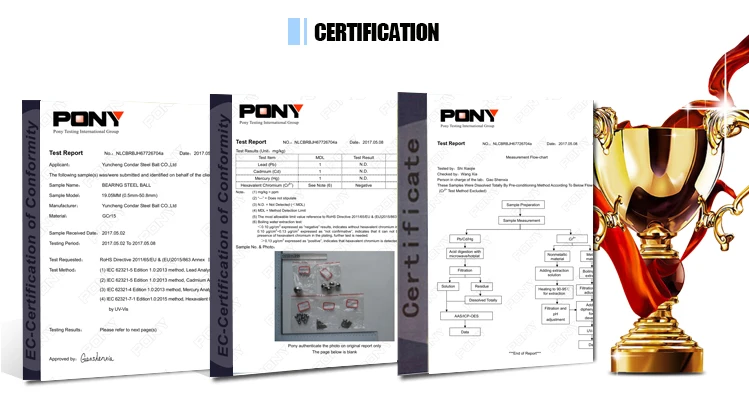
| Certification | ISO, RoHS, REACH |
| Brand and origin | Condar, Shandong, China |
| Model | cd028 |
| Manganese (Mn) | 0.50% maximum |
| Phosphorus (P) | 0.025% maximum |
| Sulfur (S) | 0.025% maximum |
Condar Kangda is a factory-direct steel ball supplier serving bearing, testing and industrial component buyers. Our range covers hardened chrome, 440C stainless and 304/316 stainless steel balls in diameters from 1.5 mm to 120 mm, in precision grades such as G10, G100 and G200, plus miniature ball bearings. We supply in bulk and support hardness and roundness testing on request. For non-standard diameters, grades or materials, send your drawing and we will quote OEM and custom production. Share your annual volume and we will confirm delivery.
They are not stainless, so a damp or wash-down environment will eventually mark chrome steel balls. Inside an enclosed, greased track they stay protected, which is where this grade normally works. If moisture is a regular part of your application, we also supply 304 and 316 stainless balls for the same duty.
Yes, provided the track was designed for the same diameter. Clean out the channel, check that nothing is bent or burred from the old set, and work the rail through its full travel before it goes back into use. We are bearing balls manufacturers, so we match the diameter you specify rather than substituting the nearest size.
G16 describes how closely each ball is held to a true sphere and to its nominal diameter, so a tighter grade means less variation from ball to ball across a batch. On a seat track that shows up as a slide with no bump or catch as the balls pass through the retainer. If your drawing calls for a different grade, we make precision steel balls to that specification.
Keep them in the closed drum or bag they arrived in, in a dry area away from machining dust, because the steel is ferromagnetic and fine swarf will cling to the polished surface. If a container is going to sit for months, a light coat of oil protects the finish. Never mix two diameters or two materials in one container, since sorting them apart again is slow and expensive.
Stainless balls are chosen for corrosion resistance and typically sit around HRC 26, while carbon steel balls run at roughly HRC 55-65 and soft carbon at about HRC 30. That puts them below the hardness this product is supplied to, which is why they suit lighter duties. Tell us the load and the environment, and we will match the right material to it.
Yes. We produce balls from 0.3 mm up to 200 mm and work to grades between G10 and G1000, including drilled and electroplated balls for special assemblies. As steel ball manufacturers we handle standard sizes and made-to-drawing work, so tell us the diameter, material and grade you need and we will confirm the details.


