

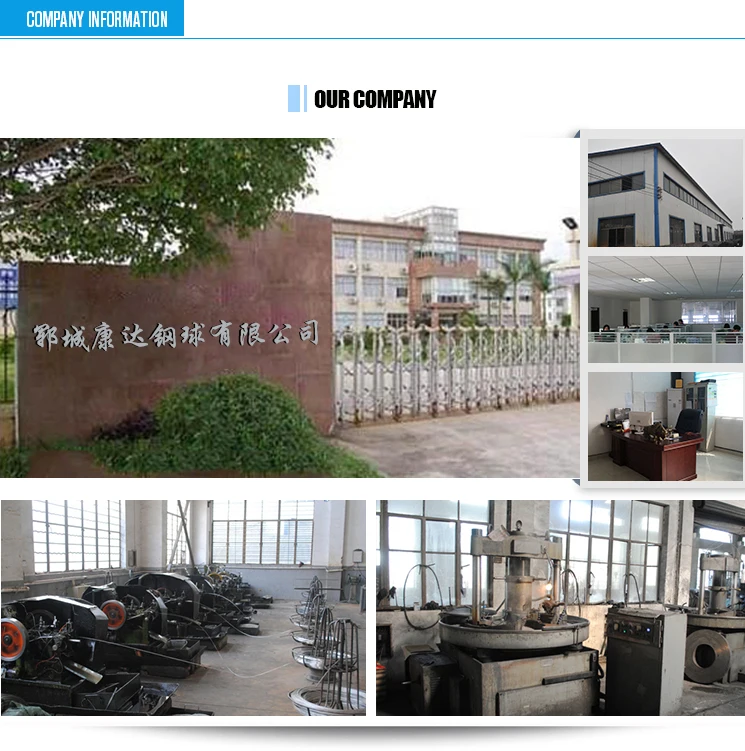
1. Established in 1998. Has 20 years of experience in production and marketing.
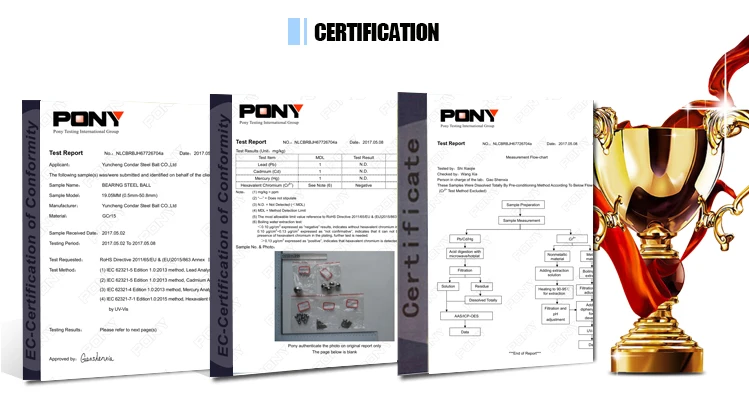
2. Possesses SGS/ROHS certification and an excellent management team.
3. Advanced production and testing equipment.
4. Fixed assets of over 10 million yuan.
5. Technical personnel with more than 10 years of production experience.
6. Our warehouse is located in a national AAAAA-level logistics park, which offers large inventory and fast delivery.
Based on 7.40% of domestic market sales.
8. High reputation, with a large number of customers from all over the world.
We sincerely look forward to establishing partnerships with any client at any time.


Solid copper spheres (1mm-25mm) and custom-made semi-perforated copper spheres are also available.
Gcr15, AISI52100 chrome steel ball :
Application areas:
It is commonly used in bicycles, bearings, motorcycles, automobiles, slide rails, ISBs, luggage, electronics industry, etc.
Function:
high speed
low price
High hardness, HRC: 60-66
Chemical and physical composition of Gcr15, AISI52100 chromium steel balls
| C | 0.95-1.10% |
| Si | 0.15-0.35% |
| Mn | Maximum 0.50% |
| P | Maximum 0.025% |
| S | Maximum 0.025% |
| Cr | 1.30-1.60% |
Photo shows


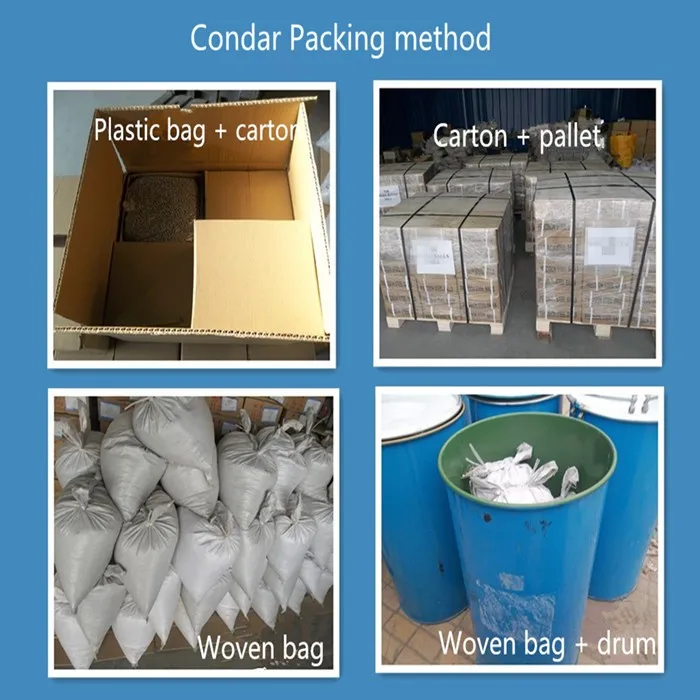
Packaging details: Carton packaging, woven bags, cartons + pallets, rollers, or packaging according to customer requirements.
Delivery details: 3-5 days after order, depending on order quantity.


Our certification
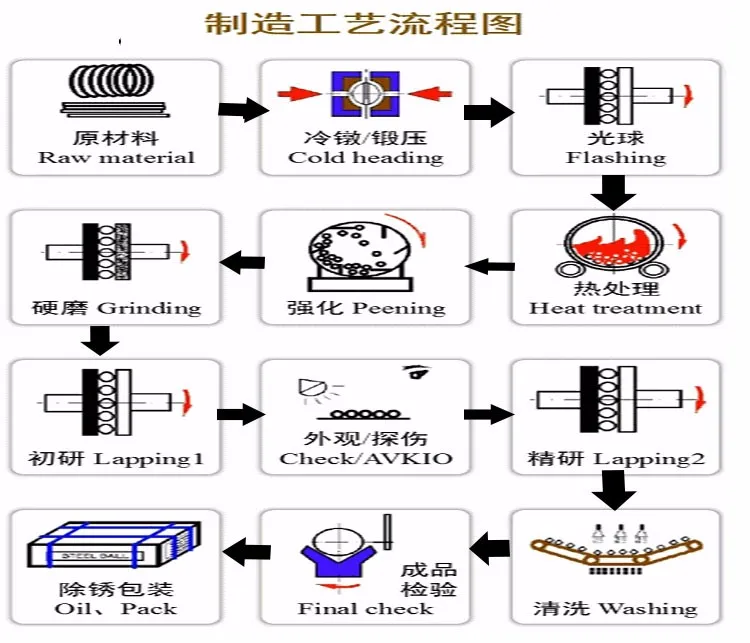
Production process
Steel ball testing
The hardness of steel balls is generally tested using a Rockwell hardness tester, and is usually expressed as HRC+ value.
1. The hardness of bearing steel balls is generally HRC60-66;
2. The hardness of stainless steel balls is generally around HRC26;
3. The hardness of carbon steel balls is generally HRC55-65;
4. The hardness of the soft carbon steel ball is approximately HRC30;
G5 and G10 high-precision steel balls are mainly used to measure ellipticity, that is, the spherical error of the ball, which is mainly detected by a roundness meter. Through its measurement, a computer can draw a very precise trajectory, thereby determining whether the ellipticity is correct.
The most important thing for steel balls is to measure the tolerance using a micrometer or a spiral micrometer. Large steel balls are measured using vernier calipers.


